Book Outline Format: 3 Templates You Can Fill In Today
Published 31 October 2026. 9 min read.
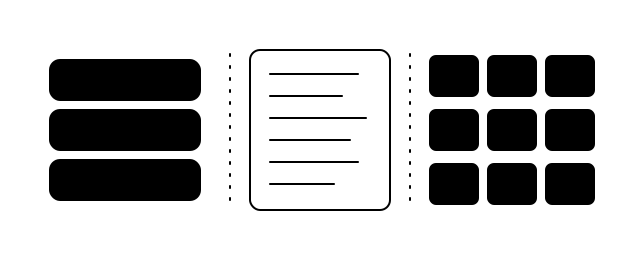
A book outline format is the structure you use to plan chapters before drafting, and the fastest one to start with is a chapter-by-chapter summary: one to three sentences per chapter. This guide compares three-act, chapter-by-chapter, and scene-based formats using the same premise filled into each, so you can pick the right one for your genre and start writing today.
Which book outline format fits your genre?
A book outline format is the skeleton you fill in before drafting: the structure that decides what each unit of your book contains and in what order. Three cover most books: a three-act outline, a chapter-by-chapter summary, and a scene-based template. Pick the wrong one and you either over-plan a loose book or under-plan a complex one.
Three formats that cover most books
The three-act format compresses your book into beginning, middle and end. The chapter-by-chapter summary lists each chapter with a one-to-three sentence description. The scene-based format breaks the book into individual scenes, each with a goal, conflict, and outcome, which is how most craft guides define the smallest working unit of fiction.
Genre-to-format quick match
| Genre or project | Best fit | Why |
|---|---|---|
| Non-fiction, self-help | Chapter-by-chapter | Chapters map to promises you make readers |
| Plot-driven genre fiction | Three-act first, then scenes | Act structure first, granular beats second |
| Character-driven fiction | Scene-based | Pacing lives at scene level |
| Memoir, expertise | Chapter-by-chapter | Chronology or themes give you the spine |
If you want a tool to generate a chapter outline from a premise, Codex AI Book Writer plans chapters and drafts them, with PDF and EPUB export for self-publishing. It works from a premise like the templates here, but it won't decide your format for you. If you publish on Amazon, read what KDP asks you to disclose about AI-generated content.
The chapter-by-chapter template in practice
A chapter-by-chapter outline gives every chapter its own entry with the same fields, so you can see the whole book at a glance and spot gaps before you draft. It is the middle ground between a one-line premise and a full scene list.
The fields every chapter entry needs
Keep it to five: chapter number and working title, a one-sentence summary of what happens, the chapter's goal (what changes for the reader or character), who or what appears, and the hook that pulls into the next chapter. Non-fiction swaps "what happens" for the key point and the example that proves it. If a field does not earn its place, cut it; the template should take minutes per chapter, not an afternoon. An AI book writer can give you the chapter list to start from; you add these fields as you edit.
How much detail is too much
If a chapter entry runs past three or four sentences, you have started drafting, not outlining. The tell: dialogue, exact settings, or paragraph-level beats. Keep those for the draft. A common mistake is outlining chapter one in detail and skimming the rest, which hides a sagging middle until you are 20,000 words in.
One premise in three formats
Take one genre fiction premise: a cartographer discovers her maps redraw themselves to show where things will be, not where they are. Here it is in all three formats.
Three-act outline
- Setup: Mara sells her father's last map, then finds one he hid, one that moves.
- Confrontation: she traces the map's predictions to a collector who has been hunting it for decades.
- Resolution: Mara must burn the map or become the person it shows her being.
Chapter-by-chapter summary
Chapter 1: Mara inherits her father's map shop. Chapter 2: the hidden map shifts overnight. Chapter 3: she tests it and it predicts a fire. Chapter 4: the collector arrives in town. And so on, one line per chapter, roughly 20 lines for a full draft.
Scene-based outline
Scene 1.1: Mara closes the shop. POV hers; her goal is to sell and leave town; the conflict is the buyer's odd questions; the outcome is a hook: the buyer knows her father's name.
Reading the differences
The same premise produces three different working documents, and the differences tell you which one to use. The three-act version forces you to state the shape of the story before you commit to scenes, which is why it exposes a weak ending fastest. The chapter-by-chapter summary gives you a word count target per chapter and a checklist you can tick off during drafting, which suits writers who need visible progress to keep going. The scene-based version is the only one that captures POV and goal per unit, which is why discovery writers who stall mid-book usually benefit from retrofitting their draft into it.
This comparison is fiction-specific. For non-fiction, the closest equivalent is the chapter-by-chapter summary in a book proposal. To have a tool draft from your outline, see How to Write a Book with AI, but choose the format yourself first.
When to outline by scene instead of by chapter
Scene-based outlining pays off when your chapters are long or multi-stranded. If each chapter covers several locations, POV shifts, or a subplot braiding through the main plot, a one-line chapter summary hides the collisions you actually need to plan. Genre fiction with tight pacing, like a thriller cutting between hero and antagonist, benefits most.
Signs you need scene-level detail
You keep rewriting chapter openings because you are not sure what happens first. You have two characters who must meet but cannot say when. Your word count per chapter swings wildly. Any of these means chapter summaries are too coarse a unit.
The cost of over-outlining
A 40-scene outline for a book that needs 15 chapters is procrastination with a spreadsheet. You lock in decisions before drafting reveals whether they hold. Start chapter-by-chapter, and drop to scene level only for the chapters that resist drafting. In Codex AI Book Writer each chapter of the outline is split into sections, each with its own instruction for what to write, so for the chapters that need it you can rewrite each section's instruction to describe one scene; if you already have your own breakdown, paste it with "New Book with Script" and skip the generated outline.
From rough premise to working outline
Step 1: Compress the premise to one sentence
Write your book idea as a single sentence: who wants what, what blocks them, and what changes by the end. If you cannot fit it in 25 words, the premise is still two ideas. This sentence becomes the test every chapter must pass later.
Step 2: List chapters or scenes
Turn the sentence into a numbered chapter list, one line per chapter, each stating what the reader knows or feels when it ends. For non-fiction, that is one promise per chapter; for genre fiction, one story beat. Aim for 10–20 lines before judging quality. Reedsy's guide to outlining a book covers this stage in more depth.
Step 3: Fill the template and stress-test it
Paste your chapter lines into whichever format you picked and add a word count target per chapter. Then stress-test: delete any chapter that does not trace back to the one-sentence premise. Codex AI Book Writer can generate a chapter list from your premise, but run the same deletion test on its output. It cannot know which beats feel flat to you, so the stress-test stays manual.
Outlining non-fiction the same way as fiction
What changes for non-fiction
The three formats transfer, but the chapter becomes a promise instead of a plot beat. Each chapter title states what the reader can do or understand by the end of it, and every outline slot holds evidence rather than scenes: a case study, a statistic, a personal story, or a framework diagram. The chapter-by-chapter format works best here because each summary doubles as a test of the promise. Writing guides such as Purdue OWL's stress knowing your purpose and audience before drafting, which is exactly what a promise-based outline forces you to do.
A filled-in non-fiction outline
Take the premise "freelancers can price their work without undercharging." A promise-based chapter outline looks like this:
- Ch 1: Why you undercharge (promise: diagnose your pricing habits). Evidence: survey data on freelancer rates, one anonymized client story.
- Ch 2: Calculating your floor rate (promise: compute a number you never go below). Evidence: a worked example with real figures, a one-page worksheet.
- Ch 3: Presenting the price (promise: send a quote without apologizing). Evidence: before-and-after email scripts, one case study.
The scene-based format still applies to narrative passages, such as opening each chapter with a short story, but the spine stays promise and evidence.
Where free outline templates fall short
First, most free templates assume a genre you are not writing. A scene-based template built for thriller pacing wastes your time if your book is a personal expertise guide, and a three-act summary gives a fantasy writer nowhere to track subplots. Fix: pick the template that matches your structure, then delete rows you will never fill.
Second, templates are static. They do not track word count per chapter or show when a chapter has grown past its planned length. Fix: pair the template with a plain word count target per chapter and check it as you draft.
Third, generic templates stop at the outline. They give you a chapter outline and leave you alone with a blank page. Fix: treat the outline as a contract with yourself, one chapter at a time.
AI tools against the same criteria
Codex AI Book Writer plans chapters and writes drafts from your premise, and exports to PDF and EPUB. Its weakness is the one every AI book generator shares: it writes from your outline, so a thin premise produces a thin book. It also cannot judge whether a chapter earns its place, only whether it exists. If you want a tool that argues with your structure, none of the usual ones, including BookFoundry, ChatGPT, InkSmith, IdeaTome and Bookwiz, will do that for you. Feed the tool a real outline first, then let it draft.
FAQ
How long should a book outline be before I start drafting?
Long enough that every chapter has a one-sentence summary and a goal, and short enough that no entry runs past three or four sentences. For most books that means 10–20 chapter lines, roughly a page. If you have written dialogue or paragraph-level beats, you have started drafting, not outlining.
Is it okay to change my outline halfway through writing?
Yes. The outline is a working document, not a contract you cannot amend. Discovery writers often stall mid-book because their chapter summaries were too coarse, which is a signal to expand the remaining chapters into scenes rather than abandon the structure. Update the outline as decisions change so it keeps matching the draft.
Can I use a book outline template for a memoir?
Yes, and the chapter-by-chapter summary fits best because memoir runs on chronology or themes rather than plot beats. Each chapter entry should state what the reader learns or feels by the end, with the what-happens field holding the memory or episode that carries it. Keep the hook field to link chapters.
What is the difference between a chapter outline and a synopsis?
A chapter outline is a planning tool: one to three sentences per chapter, listing what happens and what changes, written before drafting. A synopsis is a selling document: a condensed retelling of the finished book, including the ending, written for agents or publishers deciding whether to take it on. Same story, different purpose, different stage.